Your FYP Knows You Better Than Your Therapist (And It's Free)
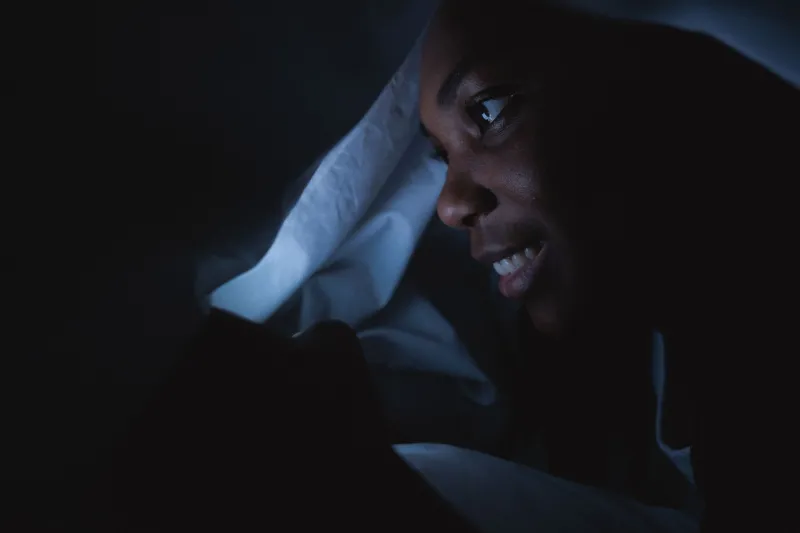
It started innocently enough. You opened TikTok at 11:43 PM because you couldn't sleep, watched a video of someone quietly restoring a rusty old knife, then another, then seventeen more. By 1 AM, you were emotionally invested in a 28-year-old woodworker from rural Tennessee named Dale who has 4,200 followers and once cried on camera when he finished a rocking chair. You don't know Dale. Dale doesn't know you. But you felt something.
Welcome to the loneliness algorithm — the accidental therapist living inside your phone.
How a Robot Learned to Read the Room
Here's the thing nobody tells you about TikTok's For You Page: it wasn't designed to make you feel understood. It was designed to keep you watching. The algorithm doesn't care about your childhood trauma or the fact that you've been feeling kind of disconnected lately. It cares about one metric — time on screen.
But in relentlessly optimizing for that single goal, it stumbled onto something almost accidentally human. The system learned that people don't just watch content they find funny or informative. They watch content that makes them feel seen. And in learning that lesson, it started delivering it with an almost eerie precision.
Scroll long enough and the FYP stops feeling like a feed. It starts feeling like a conversation. A weird, one-sided conversation with a rotating cast of strangers who somehow all seem to get it.
The Niche Creator Is the New Best Friend You Never Texted Back
Forget the mega-influencers. The real emotional heavy lifting on TikTok is being done by creators with follower counts in the low thousands — the ones talking about hyper-specific stuff like competitive aquarium keeping, the emotional experience of being a middle child in a big Southern family, or the particular kind of exhaustion that comes from working a job you're good at but don't love.
These aren't celebrities. They're just... people. And that's exactly the point.
Psychologists have a term for the one-sided emotional bond people form with media figures: parasocial relationships. The concept has been around since the 1950s, originally applied to TV personalities. But something different is happening on TikTok. The scale is smaller, the content is rawer, and the algorithm is delivering it with surgical specificity. You're not forming a parasocial bond with a celebrity who feels untouchable. You're forming one with someone who seems like they could live two towns over.
The intimacy feels real because in many ways it is real — just asymmetrical.
Why Your Brain Can't Tell the Difference
Neuroscience isn't exactly on your side here. The human brain evolved to process social connection through a fairly limited set of inputs: eye contact, voice tone, physical proximity, and shared experience. It did not evolve to account for the possibility that a stranger talking directly into a camera in their car at 9 PM would trigger the same neurological warmth as an actual friend.
But it does. Research consistently shows that parasocial interactions activate many of the same brain regions as real social contact. Your nervous system doesn't get the memo that Dale the woodworker can't actually hear you when you comment "this is so healing, I needed this today."
And here's where it gets genuinely interesting rather than just sad: for a lot of people, especially those dealing with social anxiety, geographic isolation, or just the general modern American condition of being extremely busy and kind of lonely, these connections are filling a real gap. Not replacing human relationships — but genuinely supplementing them in ways that matter.
The Algorithm as Emotional Matchmaker
There's a reason you found that creator at that moment. The FYP isn't random. It's running a constant background analysis of what you pause on, what you rewatch, what you skip in the first two seconds. It noticed you watched three videos about burnout last Tuesday. It clocked that you engage more after 10 PM. It saw you finish every single video from that one quiet creator who makes content about processing grief while also being really into houseplants.
In a way, the algorithm knows your emotional state better than most people in your physical life — not because it's smart, but because it's watching. Constantly. Without judgment. Without getting tired of you.
Which is either deeply comforting or deeply unsettling depending on your philosophical mood, and possibly both simultaneously.
The Blaa Side of the Connection Economy
Of course, none of this is without complications. The same system that delivers emotional resonance at scale also has a profit motive. Creators who make you feel understood are, whether they intend to be or not, part of a content economy that monetizes your attention and your feelings.
There's also the question of what happens when the algorithm gets it wrong — when it serves you content that amplifies anxiety rather than soothing it, or pulls you into communities that feel warm but push unhealthy ideas. The FYP has no ethical framework. It has engagement metrics.
And then there's the straightforward weirdness of grieving when a creator you love goes quiet, or feeling genuinely hurt when someone who doesn't know you exist pivots their content in a direction that no longer speaks to you. These feelings are real. They're just also kind of absurd, and it's okay to hold both of those truths at once.
What This Actually Says About Us
Maybe the most honest takeaway here isn't about TikTok at all. It's about the fact that Americans are lonely — measurably, statistically, genuinely lonely — and that we are creative and adaptable enough to find connection wherever the conditions allow for it. Even in a recommendation engine. Even through a screen. Even with Dale and his rocking chairs.
The algorithm didn't create the need. It just found a way to partially, imperfectly, accidentally meet it.
And honestly? That's kind of a lot for an app that also contains seventeen different trends involving people putting unexpected things in their Stanley cups.
The internet is weird. Connection is weird. The fact that a machine learning model running on a server farm somewhere in Virginia has become a meaningful part of how millions of Americans process their emotional lives is, depending on your perspective, either a triumph of technology or a pretty compelling argument for calling your friend back.
Probably both. Definitely both.
Now if you'll excuse us, we have to go check on Dale.