Glitching on Purpose: The Creators Who Are Breaking the Internet by Making Terrible Content
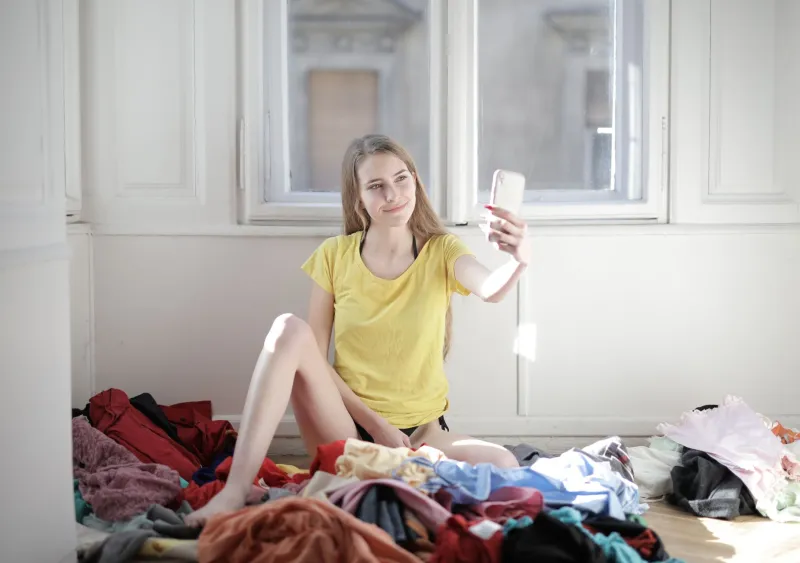
Somewhere on the internet right now, a person is filming themselves reading a grocery list in a monotone voice over a static image of a ceiling fan. They have 400,000 followers. Their last video got 2.3 million views. The comments are a wall of crying-laughing emojis and people typing, in all caps, "WHY IS THIS THE BEST THING I'VE EVER SEEN."
Welcome to the Great Algorithm Rebellion — a movement so chaotic, so deliberately terrible, and so weirdly sincere that it's become the most interesting thing happening in digital culture right now. And honestly? It makes total sense.
The Optimization Trap Nobody Talks About
For years, the gospel of content creation has been the same: hook in three seconds, post at peak hours, use trending audio, keep it under sixty seconds, add captions, boost engagement, rinse, repeat, die inside. Creators who followed this playbook built audiences. They also built something else — a kind of creative numbness that started leaking out of their screens and into your eyeballs.
Everything started to look the same. The same ring light glow. The same talking-head format. The same faux-casual "okay so I have to tell you guys something" opener. Scroll TikTok or YouTube Shorts for twenty minutes and you'll start to feel like you're watching one single infinite video made by a committee of robots who studied human joy but never quite understood it.
The algorithm didn't just reward good content. It rewarded compliant content. And compliance, as any art school dropout will tell you, is the enemy of anything interesting.
Enter the Chaos Merchants
So a funny thing happened. Some creators — burned out, bored, or just deeply weird in the best possible way — started doing the opposite of everything they were supposed to do. Long videos about nothing. Intentionally bad green screen effects. Videos filmed sideways, or in complete darkness, or featuring ten minutes of someone slowly eating a single cracker while staring directly into the camera.
Creator "Blobfish Energy" (a pseudonym she uses across platforms) started posting what she calls "anti-content" after three years of grinding out perfectly optimized lifestyle videos. "I had the thumbnails, the hooks, the SEO titles. I also had a complete emotional breakdown," she told us over email. "So one day I just filmed my bathroom ceiling for four minutes and posted it with the caption 'content.' It got more engagement than anything I'd made in a year."
That's not an isolated story. Across YouTube, TikTok, and even Instagram — a platform so aesthetically rigid it might as well have a dress code — creators are finding that the more deliberately unwatchable their content is, the more people watch it.
Why Does Bad Feel So Good?
There's actual psychology behind this, and it's not as weird as the ceiling fan video. After years of hyper-polished, hyper-optimized media, audiences have developed what researchers are calling "aesthetic fatigue" — a kind of visual and emotional exhaustion from consuming content that is technically perfect but spiritually empty.
When something genuinely strange shows up in a feed, it creates a pattern interrupt. Your brain, which has been running on autopilot through a thousand identical videos, suddenly goes: wait, what is happening? That moment of confusion is followed almost immediately by delight — or at least curiosity — and that combo is basically engagement crack.
There's also an authenticity signal buried in the awfulness. Bad production values, in 2024, have become a weird proxy for realness. If someone clearly didn't care about optimizing this video, the thinking goes, then maybe they actually meant it. Maybe this is just... a person. Being a person. On the internet. And apparently that's incredibly rare and precious now.
The Meta-Joke That Became a Movement
What makes this trend genuinely fascinating — and very 100Blaa — is how it exists on multiple levels simultaneously. Some creators are being ironic. Some are being sincere. Some started ironic and ended up sincere. Some are so committed to the bit that nobody, including themselves, can tell anymore.
Take the micro-genre of "nothing videos" that have been multiplying on YouTube — long-form content where literally nothing happens, sometimes for hours. Rain sounds. A fish tank. A GoPro strapped to a Roomba. These started as ambient content for people who needed background noise, but somewhere along the way they became a statement. A refusal to perform. A middle finger to the three-second hook and the call-to-action and the "smash that subscribe button."
Creator collective "Void Content Lab" has built an entire channel around what they call "algorithmically hostile" videos — content specifically designed to confuse recommendation engines. Odd durations. Titles that don't describe the content. Thumbnails that are just slightly wrong in ways that are hard to articulate. "We're not trying to go viral," one member explained in a rare interview. "We're trying to be ungovernable."
They have 800,000 subscribers.
The Irony Sandwich
Here's where it gets deliciously complicated. The moment "bad content" becomes a proven strategy, it starts getting optimized. There are now guides — actual guides — on how to make your content feel authentically unoptimized. Tutorial videos on performing chaos. Which means the rebellion is already being absorbed back into the machine it was rebelling against, and everyone involved seems aware of this, and that awareness is itself part of the content, and we're now several layers deep into an irony sandwich that could probably sustain us through winter.
But maybe that's okay. Maybe the point was never to permanently break the algorithm. Maybe the point was just to remind everyone — creators and audiences alike — that the internet is supposed to be weird. That weirdness is not a bug. That a person filming their ceiling fan at midnight is, in some fundamental way, more honest than a brand partnership disguised as a personal story.
What This Means for the Rest of Us
If you're a creator staring down the barrel of another perfectly formatted content calendar, the lesson here isn't necessarily "make bad videos." The lesson is closer to "make your videos." The creators winning with chaos aren't winning because chaos is the new optimization hack. They're winning because they stopped performing and started existing, and audiences can feel the difference even when they can't name it.
And if you're just a regular human consuming content — which, same — maybe the next time something gloriously pointless crosses your feed, don't scroll past it. Sit with the ceiling fan for a minute. Let the grocery list wash over you. Let your brain be confused and delighted by something that wasn't engineered to make you feel anything in particular.
That might be the most radical act available to us right now.
The algorithm will survive. It always does. But so will the ceiling fan video. And honestly, between the two, we know which one we're rooting for.