Everybody's Online and Nobody's Home: The Great Digital Loneliness Trap
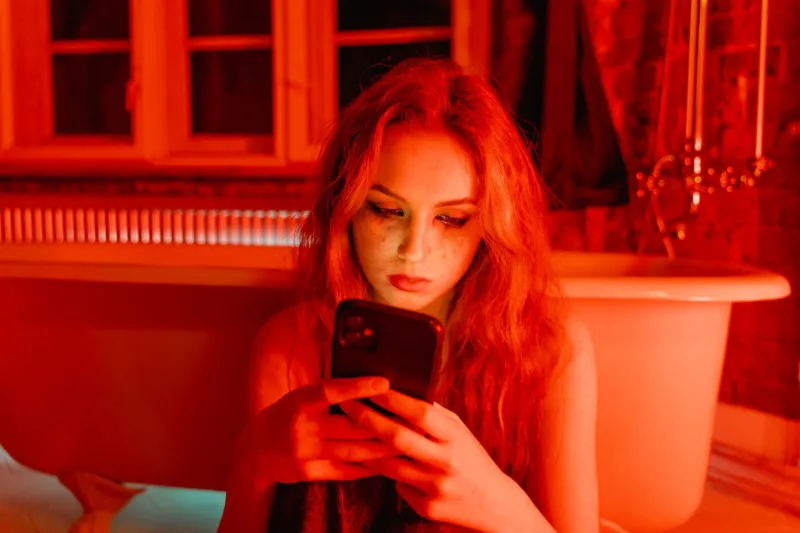
Let's set the scene. It's a Tuesday night. You're lying in bed, phone in hand, scrolling through a feed full of people laughing with their friends, posting sunset selfies, and announcing milestones you feel vaguely guilty for not celebrating harder. You double-tap a few things. You watch a thirty-second video of a golden retriever failing to catch a frisbee. You feel briefly warm. Then the warmth evaporates, and you're just lying there again, in the dark, with your phone screen slowly dimming like it's also tired of you.
Welcome to the loneliness paradox — arguably the weirdest and most underreported side effect of living your entire social life inside a glowing rectangle.
The Platform Promised You People. It Delivered an Audience.
Here's what nobody told you when you signed up for every social platform in existence: there's a fundamental difference between being seen and being known. Platforms are extraordinarily good at the first thing. They will give you likes, comments, reposts, and the occasional viral moment that makes you feel, briefly, like a celebrity at your own birthday party. What they are genuinely terrible at is the second thing — the slow, inefficient, deeply human process of someone actually getting you.
The architecture of most social platforms is built around performance, not intimacy. You craft a post. People react to the post. You feel validated by the reaction. But the post is never quite the full you — it's the highlight reel you, the witty you, the you who cropped out the mess on your kitchen counter. And when people love that version, there's a quiet voice in the back of your head wondering if they'd stick around for the unedited cut.
Psychologists have a term for this gap: the presentation-intimacy divide. The more curated your online self becomes, the further the distance grows between who you're showing and who you actually are. And that distance? It feels a lot like loneliness, even when you're technically surrounded by people.
The Algorithm Thinks It's Helping. It Is Not Helping.
Here's where it gets genuinely strange. The algorithms powering your feeds are not neutral. They are not simply showing you the world — they're showing you a very specific slice of it, one optimized for maximum engagement, which is a polite way of saying maximum emotional reaction.
Engagement, it turns out, spikes hardest around content that makes you feel something intense — outrage, envy, inspiration, longing. The algorithm isn't trying to make you sad. It's just that sadness, jealousy, and righteous anger keep you scrolling, and scrolling is the whole point. So your feed becomes a funhouse mirror — reflecting back a distorted version of reality in which everyone is either thriving spectacularly or in crisis, with very little of the boring, ordinary middle ground where most actual human life happens.
The result is what researchers are calling algorithmic isolation: the more time you spend inside your personalized content bubble, the narrower your sense of the world becomes, and the harder it gets to find common ground with people who exist outside that bubble. You end up deeply connected to a very specific sliver of the internet and increasingly baffled by everyone else.
The Parasocial Problem Nobody Wants to Admit
Okay, real talk. You feel close to certain creators, right? Like, genuinely close. You know their coffee order, their childhood trauma, their opinions on the Oxford comma. They make you feel less alone in a very specific and real way, and we're not here to shame you for that — parasocial relationships are a completely normal human response to consistent, intimate-feeling content.
But here's the uncomfortable math: that creator does not know you. They cannot show up when you're having a bad week. They cannot sit with you in the specific silence that only real presence provides. And the more time you spend feeling connected to people who can't actually connect back, the less energy you may have — or the less need you feel — to build the messier, slower, more demanding relationships that real community requires.
It's not that parasocial bonds are fake. It's that they're asymmetrical in a way that real friendship isn't, and over time, that asymmetry can quietly hollow out your sense of what connection even feels like.
So What Does Real Connection Actually Look Like Anymore?
Good news: it still exists. Slightly inconvenient news: it's harder to find and way less efficient than scrolling.
Actual community — the kind that leaves you feeling full rather than vaguely depleted — tends to happen in the cracks of the internet, not the main stage. It's the Discord server for fans of a deeply niche thing. It's the subreddit where people are genuinely helping each other rather than performing helpfulness. It's the comment thread where two strangers have a real conversation instead of just trading reactions. It's small, it's slow, and it doesn't generate impressive engagement metrics.
Off the internet entirely, it looks even more analog: showing up somewhere regularly, being bad at something in front of other people, having a conversation that doesn't need to be documented. Boring stuff. Revolutionary stuff.
You're Not Broken. The Design Is.
If you close this tab feeling vaguely seen and mildly unsettled, good — that means we did our job. The loneliness you feel online isn't a personal failure. It's a pretty logical response to platforms that were designed to maximize time-on-site rather than genuine human flourishing. They gave you the simulation of community because the simulation is scalable. Real connection isn't.
None of which means you should delete everything and move to a cabin. It just means maybe — maybe — the next time you reach for your phone at 2 a.m. feeling inexplicably empty, you pause for one second and ask yourself what you're actually hungry for.
Because it probably isn't another golden retriever video.
(Though, honestly, no judgment if it is.)